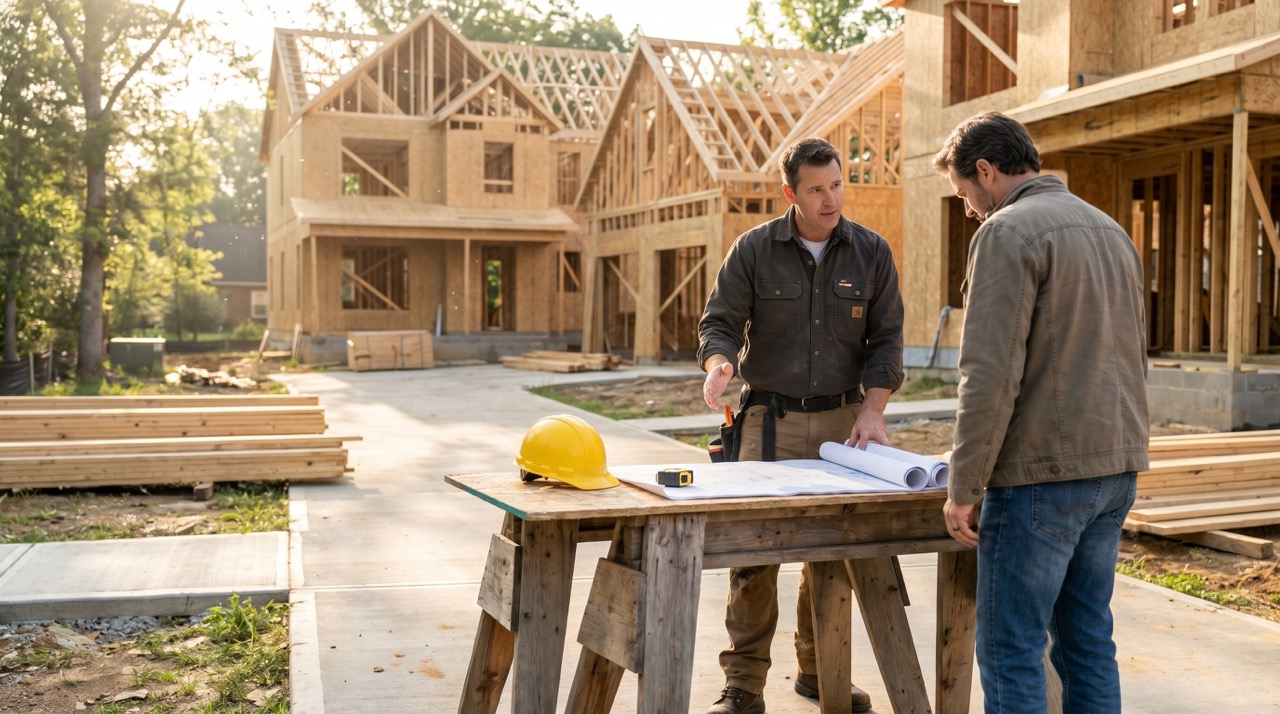
Why Choosing the Right Contractor Matters More Than You Think
Hiring the right general contractor is the single biggest factor in how your construction project turns out. A good contractor keeps your project on schedule, on budget, and done right the first time. A bad one can cost you months of stress, expensive rework, and a finished result that never lives up to what you expected.
The challenge for most homeowners is that every contractor looks credible at first glance. Websites look polished, promises sound the same, and many people are hiring for the first time without a clear way to separate experienced professionals from the crews that will vanish or cut corners once the work begins.
Whether you are planning a kitchen remodel, a home addition, a new build, or a full renovation in Knoxville, asking the right questions before you sign anything can save you time, money, and frustration later.
Step 1: Verify They Are Licensed and Insured in Tennessee
In Tennessee, a general contractor license is required for residential or commercial projects over the applicable threshold, and trade-specific work also requires the correct classification. Before you discuss pricing, ask for the contractor’s license number and verify it yourself through the state. A legitimate contractor will not hesitate to provide that information.
Insurance matters just as much. A qualified contractor should carry general liability coverage to protect your property and workers compensation coverage to protect you if someone is injured on the job. Do not rely on verbal reassurance alone. Ask for a certificate of insurance and review it before the project starts.
If a contractor hesitates to provide licensing or insurance documentation, that is not a small issue. It is a clear warning sign that you should keep looking.
Step 2: Look at Real, Recent Work
Anyone can post polished photos online, so you need proof of real projects completed in Knoxville or the surrounding East Tennessee area. Ask for recent examples that are similar in size and complexity to what you are planning, along with references from clients whose jobs were completed within the last year.
When you speak with references, go beyond asking whether they liked the final result. Ask whether the project finished on time, whether the final cost stayed close to the original estimate, how the contractor handled unexpected issues, and whether they would hire the same company again for a larger project.
That final question is often the most revealing. A contractor may do acceptable work on a small bathroom but struggle with a major renovation or new build. A client willing to trust them again with a bigger scope is giving you a far stronger endorsement.
Step 3: Get a Detailed Written Estimate
A serious contractor does not hand you a vague number and call it an estimate. You should receive a written proposal that clearly explains the scope of work, materials, labor, permits, inspections, project timeline, payment schedule, and how change orders will be handled.
Without that level of detail, you have no real baseline for what is included. That is when projects start drifting, costs rise unexpectedly, and homeowners discover too late that important work was never part of the original price.
It is smart to compare at least three written estimates, but do not assume the lowest bid is the best value. In construction, the cheapest number is often the one that creates the most problems later because something important was left out or the contractor plans to recover profit through change orders.
Step 4: Understand the Payment Schedule
You should never pay for a project in full upfront. A reasonable structure usually includes a modest deposit to secure the schedule and initial materials, followed by progress payments tied to actual milestones and a final holdback until the work is complete, inspected, and walked through.
Any contractor asking for half the total cost before work begins deserves extra scrutiny. The same goes for contractors who insist on cash-only payments. You should always have a clear paper trail and a payment schedule that reflects progress, not promises.
Holding back a final portion until the punch list is complete protects you. It creates leverage to make sure the small details are finished instead of being left unresolved after the crew moves on.
Step 5: Ask About Their Subcontractors and Communication
Most general contractors rely on subcontractors for trades like electrical, plumbing, HVAC, and specialty work. That is normal, but you should ask whether they use the same trusted team repeatedly or assemble crews job by job. Stability usually leads to better coordination and more consistent quality.
You also need to know who is accountable if something goes wrong. The general contractor should remain your single point of responsibility. You should not be stuck chasing subcontractors yourself to resolve poor workmanship or damage.
Communication style is equally important. Pay attention during the estimate process. If they are already slow to respond, vague in their answers, or late to meetings before earning your business, those habits usually get worse once the job is underway.
Step 6: Watch for Red Flags Before You Sign
Some warning signs are easy to miss unless you know what to look for. Be cautious of door-to-door offers tied to leftover materials, pressure to sign immediately, resistance to pulling permits, missing contracts, no verifiable business address, or reviews that look suspiciously generic and clustered into a short time period.
A trustworthy Knoxville contractor should be willing to answer questions thoroughly, explain the process clearly, and give you enough information to make a confident decision without pressure. Confidence and transparency go together. Evasion and urgency usually do too.
If multiple red flags appear at once, move on. It is far less expensive to keep interviewing contractors than to recover from hiring the wrong one.
What a Good Knoxville Contractor Should Feel Like
A quality contractor will walk you through the process before work begins, provide a realistic timeline, offer references you can actually contact, and keep communication clear from start to finish. During the project, they should solve problems professionally, respect your property, and stand behind the finished work.
That is the standard homeowners should expect. Anything less creates unnecessary risk, especially on a project that affects your home, your budget, and your day-to-day life.
If you are planning a remodel, new build, commercial project, or excavation job in the Knoxville area, taking the time to vet your contractor carefully is one of the smartest decisions you can make before construction begins.
Written by GM Construction Group
Licensed residential, commercial, and industrial construction in Knoxville, TN and surrounding areas.
Get a Free Estimate